
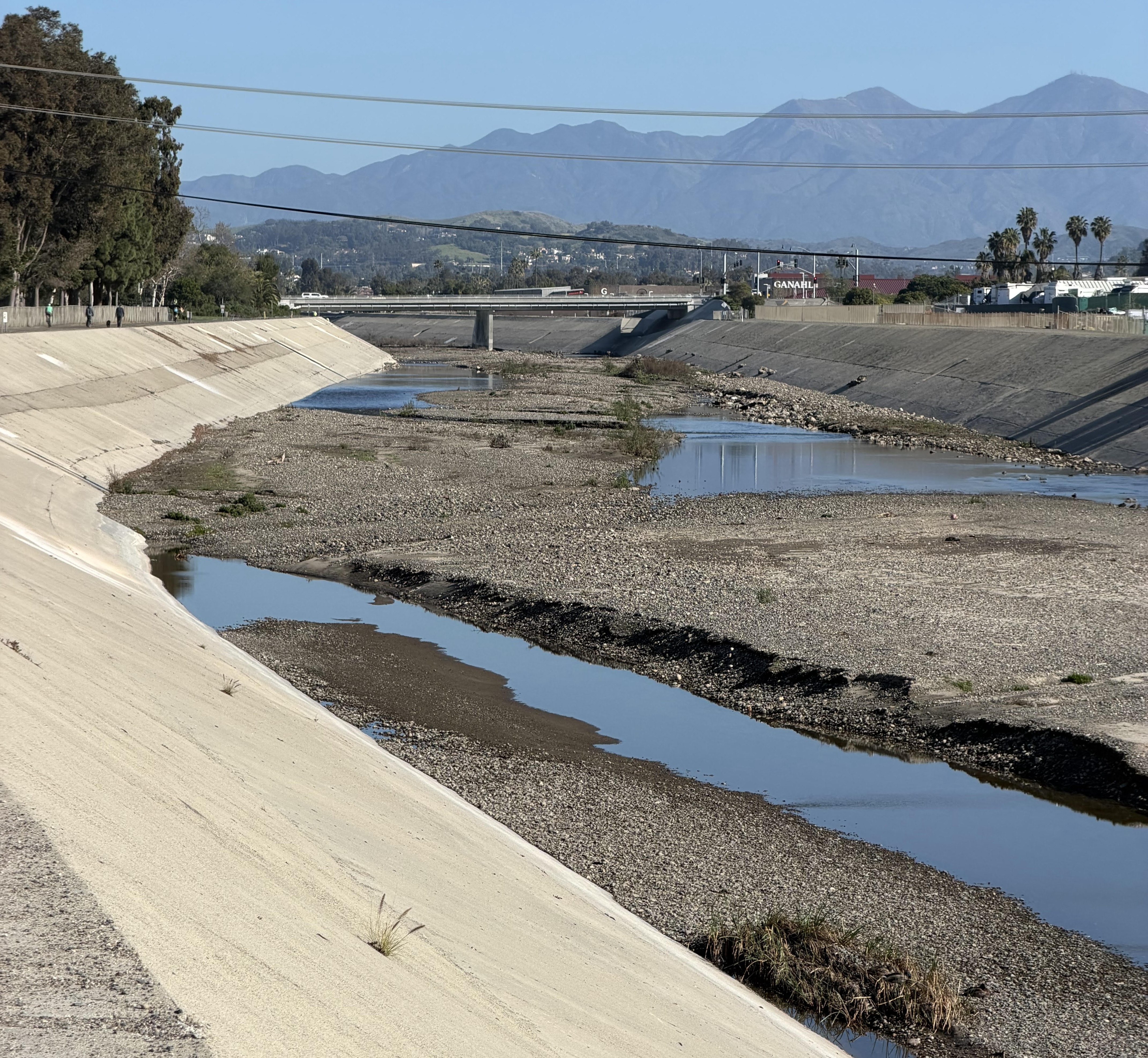
Header Image: San Juan Creek taken from the recreational trail. The lower 3.5 miles of the creek are channelized with concrete sides but retain a soft bottom.
In the past few weeks, videos of San Juan Creek, which meets the ocean at the popular Doheny State Beach, have gone viral. Instead of featuring scenic walking trails or the surf break at the creek-mouth, the videos focus on the concrete-lined area upstream and the mysterious liquids that workers are hosing onto plants and rocks.
Since at least 2013, Orange County Public Works (OCPW) and its contractors have been spraying herbicides, including glyphosate, also known as RoundUp, in San Juan Creek to manage weeds and plants that might limit the flow of stormwater in the channel. Herbicides are a type of pesticide used to kill plants and weeds, which can impact both aquatic ecosystems and human health when they enter waterways.
Because herbicides and other pesticides can greatly impact the health of our waterways, there are different regulations at the local, state, and federal levels, but these regulations are only able to protect our water if they are properly enforced. (You can read more about the regulations that affect this specific issue here.)
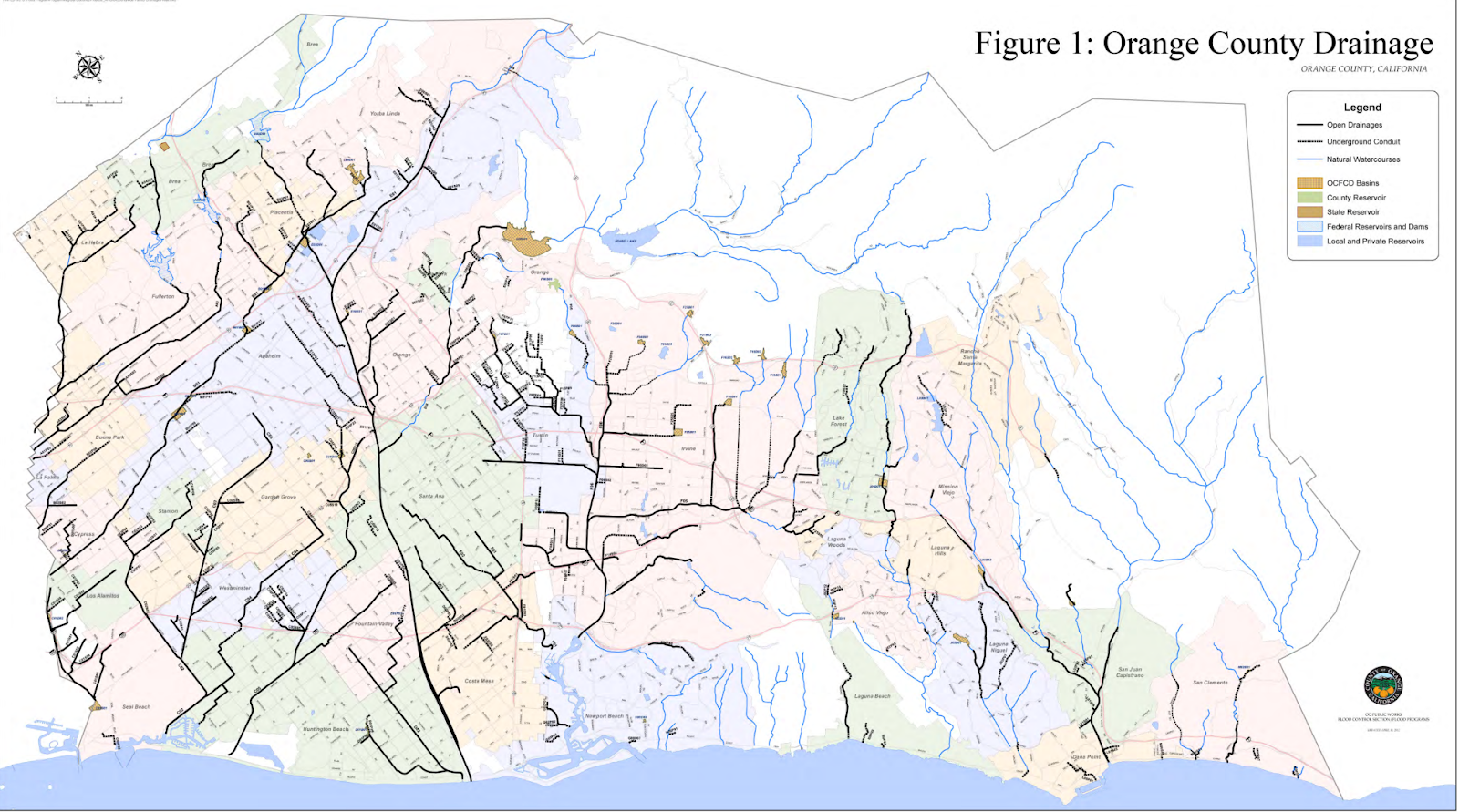
Map of all the waterways (in black) that OCPW is permitted to spray herbicides in. Image from page eight of the Orange County Public Works Aquatic Pesticide Application Plan.
Many community members were unaware of these herbicide practices happening near their homes, parks, and beaches, and quickly shared their outrage and concern. Community members have approached the Surfrider Foundation about this issue, and we are deeply concerned by the activities taking place and the significant environmental and public health impacts of herbicide use.
Thanks to a coalition of local community activists called the Creek Team (Website & Instagram), County Supervisor Foley (District 5) hosted a Town Hall where over 200 community members came to share their concerns and ask questions of County officials. In this meeting, Supervisor Foley agreed to immediately stop spraying in San Juan and Trabuco Creeks, as well as provide public notice before spraying occurs in other locations.
While much of the initial attention has been focused on San Juan Creek, these herbicide application practices are occurring throughout many waterways in Orange County, and all of these waterways deserve the same level of protection, transparency, and accountability.
What We Know
Surfrider has independently investigated community complaints and photo evidence, OCPW annual reports, and an enforcement letter sent by the Water Board. We have found that OCPW has previously been non-compliant in the permit’s monitoring and reporting requirements, submitting reports with incomplete or inconsistent data and insufficient water quality monitoring. OCPW additionally does not provide public notification under the assumption that there is no public access to flood control channels, even when there are adjacent parks, public trails, residences, and nearby beaches directly downstream.
OCPW is operating under a permit that was submitted in 2013 and expired in 2018, but it is still in “administrative effect,” according to the Water Board. We have seen that OCPW’s current operations and methods are not meeting community expectations or considering impacts to nearby waterbodies. This is a critical opportunity to rethink how the county manages our waterways and update its protocols to reflect environmental best practices and community expectations.
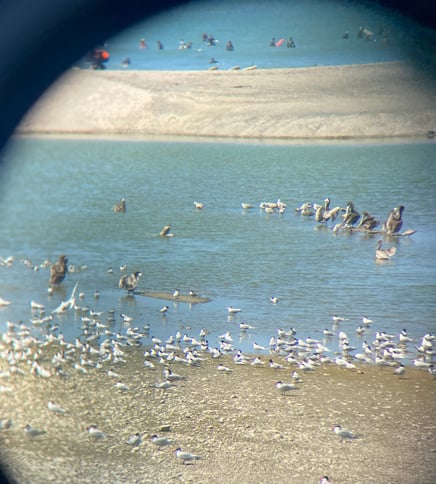
Photo of birds in San Juan Creek estuary, with surfers in the background at Doheny State Beach.
Surfrider Supports:
1. Improved Transparency
Public notification is not posted before, during, or after herbicide and other pesticide applications. Application schedules are unpredictable and can happen 10-20 times a year at sites managed by OCPW. Without advanced notification, community members have been unable to take preventative actions to limit exposure to themselves or their families. Physical signs notifying the public of what chemicals are being applied and any health warnings for exposure should be posted along any adjacent public right-of-way (sidewalks, walking/biking trails) and at public beach access points downstream of treated water bodies.
Supervisor Foley verbally committed to implementing public notification of herbicide applications at the Town Hall. Surfrider seeks to ensure this commitment is implemented consistently across the entire county, with clear, timely, and accessible communication so communities know when, where, and what chemicals are being applied in their local waterways.
2. Accountability and Compliance
Community complaints need to be addressed both by the enforcement agencies and county employees who oversee herbicide applications and permits. Surfrider has found evidence of insufficient reporting, insufficient water quality monitoring, and application practices that are not compliant with the County’s Water Board permit. We are also currently investigating compliance with the Orange County Agricultural Commissioners.
The County has a responsibility to remain fully compliant with all permit requirements and applicable regulations. The county is not only accountable to many agencies, but also to the communities it serves. Surfrider supports robust monitoring, reporting, and transparency measures to ensure compliance, protect water quality, and restore public trust.
3. Improved Weed and Vegetation Management Practices & Reduction of Herbicide Use
Cease foliar spraying (backpack sprayers, handgun applicators, and boom sprayers) within water collection facilities, detention basins, creeks, rivers, and lined and unlined stormwater conveyances managed by OCPW. Application of herbicides of any kind should be a last resort in vegetation management practices, and only used in combination with other manual and cultural methods for aggressively spreading invasive non-native species (rated high or moderate by Cal-IPC).
Through the Creek Team’s discussions with Supervisor Foley and OCPW, there is agreement to establish a third-party oversight committee to review and update the County’s Integrated Pest Management Plan and Aquatic Pesticide Application Permit, which includes protocols for herbicides. Surfrider has been invited to participate and looks forward to identifying solutions that prioritize non-toxic alternatives, protect aquatic ecosystems, and safeguard public health.
Ways to Take Action Against Pesticide and Herbicide Pollution:
1. Keep OC Public Works accountable! If you witness herbicide spraying occurring inside or near a publicly managed river channel or waterway, submit complaints to:
- California EPA is the umbrella agency that the State Water Resources Control Board (SWRCB) sits under. These complaints provide critical information that triggers SWRCB enforcement review and action. Take photos and videos and include those in your submission. Find the CalEPA Complaint Form here.
- Orange County Agricultural Commission enforces California pesticide laws and regulations at the county level. Call their main line at 714-955-0100 or email oc.commissioner@ocpw.ocgov.com. Include comprehensive details, including the date, time, location, and description of what was occurring in your complaint.
2. Let the County Board of Supervisors know you care about this issue. There are many ways to make your voice heard, including via email, phone, or public comment at a Board of Supervisors meeting. You can identify your District Supervisor here and find upcoming Board meetings here.
3. Reduce your personal pesticide and herbicide use at home. Check out Surfrider’s Ocean Friendly Gardens program for resources on how to create more sustainable watersheds.
By raising awareness and organizing together, our community has the power to drive meaningful change — stay tuned for more updates and ways to take action toward long-term solutions that protect our ecosystems and public health via Surfrider South OC email newsletters or Instagram pages for the South Orange County chapter.
 As Southern California Regional Manager, Michaela supports the six chapters between Los Angeles and San Diego in implementing their community-based programs and policy campaigns. She earned a master's degree in Conservation and Restoration Science from UC Irvine.
 As Ocean Friendly Gardens Manager, Kathryn is passionate about advocating for watershed protection through gardens and landscapes. She graduated from UC Santa Cruz with a B.S. in Marine Biology, and developed a love for California native plants and restoration work during her time at the Los Cerritos Wetlands in Long Beach.