
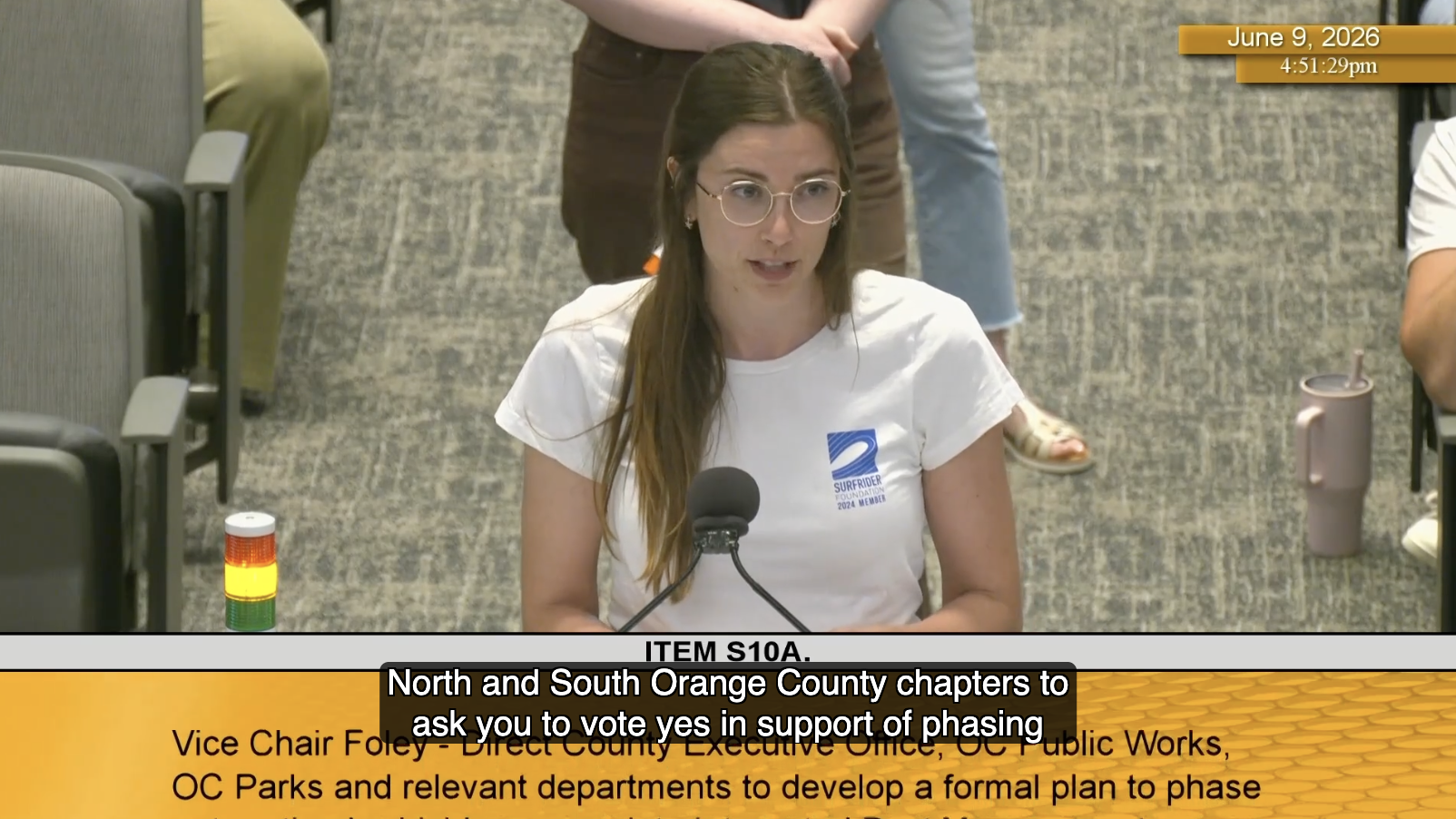
The County’s herbicide management practices were a topic of discussion during both of June’s Board of Supervisors meetings. There were some wins and some losses, but these discussions marked the first time the Board has formally and publicly examined the County’s herbicide use practices, signaling growing attention to the issue and creating an important opportunity for continued public engagement and policy reform.
Tuesday, June 9
Supervisor Foley championed an agenda item that would have directed OC Public Works to develop a plan to phase out routine herbicide use in County waterways and establish public notification whenever herbicide applications occur. While the Board of Supervisors did not approve the item in its entirety, portions of the list of recommended actions were adopted, including directing staff to identify waterways that can be restored. However, the proposal to develop a plan for phasing out herbicide use was not approved.
Several Supervisors expressed concerns about the potential impacts ton flood risk management, including implications for homeowners' flood insurance, as well as a lack of information regarding the costs and feasibility. Cost was top of mind, as the Board had spent much of the morning hearing public comment on the County's annual budget, with more than 150 community members weighing in.
Despite these challenges, the meeting resulted in a win: the Board formally approved the pilot project in San Juan and Trabuco Creeks. These waterways will not be sprayed with herbicides for at least one year, allowing OC Public Works to evaluate vegetation growth rates and mechanical and manual alternatives to vegetation management.




Tuesday, June 23
The recommendation to require public notification of herbicide applications was brought back before the Board separately by Supervisor Foley and was approved unanimously. Requiring public notification is a critical step toward greater transparency and accountability. Residents and visitors have the right to know when herbicides are being applied so they can make informed decisions about recreating along public creekside trails, for example.
The primary concern raised by other Supervisors was the potential for targeted harassment of Public Works employees, citing an incident that occurred at San Diego Creek that prompted the County to consider hiring security.
Spraying is still halted countywide, but if you witness herbicide spraying in our waterways, please do not trespass or harass employees. Instead, document the activity from a safe, publicly accessible location, and report your observations to the appropriate regulatory agencies.
Surfrider remains an active participant in Supervisor Foley’s advisory committee, which is working to advance non-toxic vegetation management strategies and strengthen the County's Integrated Pest Management Plan. The campaign continues, so stay tuned for more updates and opportunities to advocate for healthier communities.
 As Southern California Regional Manager, Michaela supports the six chapters between Los Angeles and San Diego in implementing their community-based programs and policy campaigns. She earned a master's degree in Conservation and Restoration Science from UC Irvine.